

- Medical
Why the Flu Shot in 2026 Matters
9th Apr 2026
If you’ve ever thought about skipping your flu shot, this year is a good time to reconsider.
Read more6th May 2026
The four of the most common respiratory illness can look alike but they are caused by different viruses and tend to affect people in different ways. This article breaks down the key differences and what to look out for.
Every year in Australia, a mix of respiratory illnesses circulates through homes, workplaces, schools and childcare centres. Many of them cause similar symptoms, including coughs, fevers, runny noses and fatigue which can make them hard to tell apart.
Four of the most common are the Flu, RSV, COVID 19 and Whooping Cough. Even though they can look alike, they are caused by different viruses and tend to affect people in different ways.
This article helps break down the key differences using information from Australian government and authorised medical sources. It is general information only and does not offer health advice.
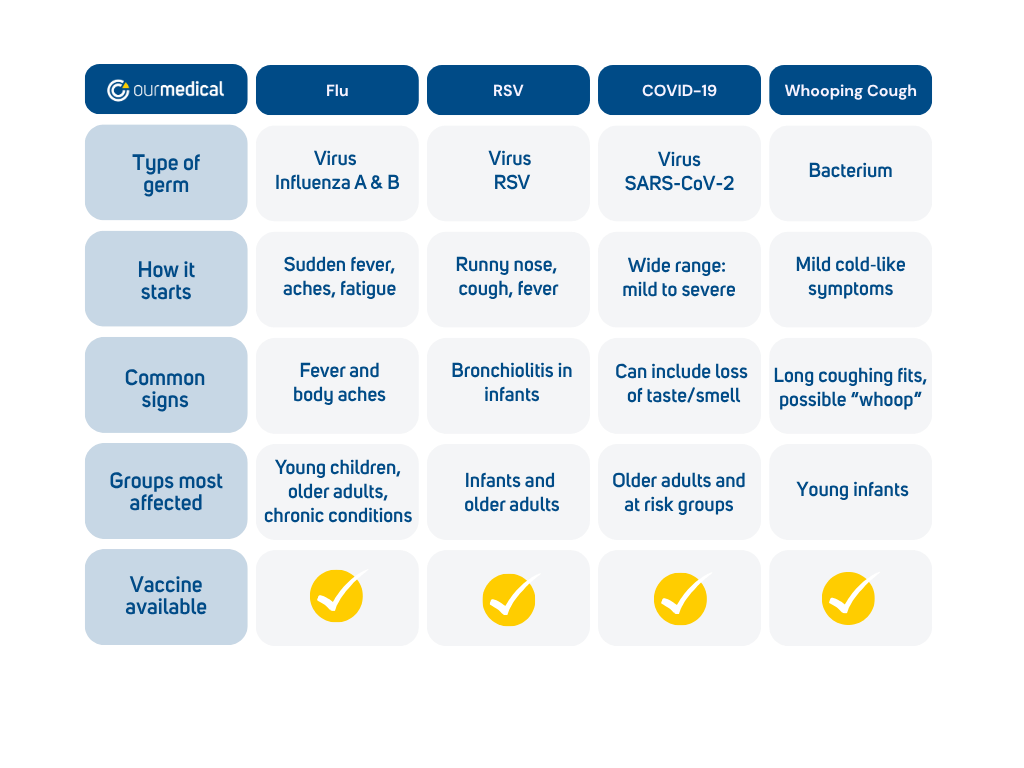
Influenza is caused by Influenza A and B viruses. It tends to come on suddenly, with fever, aches and exhaustion. In Australia, flu activity usually peaks during the cooler months.
RSV is a virus that is especially common in young children. It is one of the main causes of bronchiolitis and pneumonia in infants but it also affects adults, particularly older people.
COVID-19 is caused by the SARS CoV 2 coronavirus. It can range from no symptoms at all to severe pneumonia. Some people experience longer lasting symptoms after the initial infection.
Whooping Cough is caused by the Bordetella pertussis bacterium. It’s known for long lasting coughing fits that can be severe, especially in babies. Some people make a “whoop” sound when breathing in after a coughing burst.
All four illnesses spread mainly through respiratory particles that are released when someone breathes, talks, coughs or sneezes.
Symptoms overlap a lot, which is why health authorities emphasise that medical testing is how these infections are distinguished.
Australian health departments highlight certain groups as more likely to experience severe illness:
This summary highlights the key differences between common respiratory illnesses at a glance:
If you are experiencing symptoms such as fever, cough, or other signs of a respiratory illness, we encourage you to visit one of our centres to see a GP. To help protect other patients and our teams, we also ask that you follow good social etiquette, including wearing a mask where appropriate.
Further Reading & References
Australian Government – Department of Health and Aged Care
NSW Health
Communicable Diseases Network Australia (CDNA)
Healthdirect Australia (Government Funded)
Why the Flu Shot in 2026 Matters
9th Apr 2026
If you’ve ever thought about skipping your flu shot, this year is a good time to reconsider.
Read moreA Nasal Spray Flu Vaccine for Children under 18yrs
15th Apr 2026
As winter approaches, flu cases tend to rise and young children are among those most at risk of serious illness. The good news is that protection is available early and it’s free*.
Read moreA Severe Flu Season is Coming - Here’s How to Get Ahead
8th Apr 2025
As the cooler months begin to settle in, health authorities are sounding the alarm: this year’s flu season is expected to be one of the most severe Australia has experienced in recent years.
Read more
